
Lea Kissner on user privacy, encryption and 'tricky human implications'
"I'm not satisfied with any privacy settings set-ups I've ever seen" — on why fixing digital privacy is complex but not impossible.
Writer & journalist / Berlin
Irish writer and journalist covering tech, culture, business, health and harm reduction. Over a decade of staff and freelance work at the Business Post, Silicon Republic, The Phoenix and spunout.
Commission me
Published in Business Post / Silicon Republic / The Phoenix / spunout / RIP.ie / i-D / The Next Web / Dublin Inquirer / RTÉ Radio 1 / Totally Dublin
Privacy, AI, security and the people building the tools we live with.
"I'm not satisfied with any privacy settings set-ups I've ever seen" — on why fixing digital privacy is complex but not impossible.

Futurists, Amy Webb explains, are not oracles but they can give a good indication of the direction in which society is going.

New research by cybersecurity firm Deeptrace has found that, overwhelmingly, most deepfakes online are non-consensual porn.

Motorola Solutions' technology chief on partnering with police forces, edge intelligence, and where facial recognition should — and shouldn't — be used.

As governments rush municipal services online, how can roll-out and delivery stay ethical?
Discussing Facebook's move to end-to-end encryption on its messaging services.
Investigations, interviews and analysis from the Business Post, Silicon Republic and The Phoenix.
PostPlus cover story, with Barry J Whyte. War in eastern Europe has sharpened focus on a century-old policy most of the public remains reluctant to abandon.

A Canadian medicinal cannabis supplier, owned by one of the world's largest tobacco companies, lobbied to establish production in Ireland.

A Dublin dealer under joint investigation by the CCPC and the Garda National Economic Crime Bureau.

After losing 200,000 subscribers in a quarter, can a crackdown on account sharing reverse the trend?
Dan O'Dowd's single-issue Senate campaign to make software "safer for humanity" — and whether he cares about winning at all.

Facebook has conceded that its previous ban on praise of white supremacy was not exhaustive enough, and so has rolled out a series of new policies designed to curb hate speech on the platform.

A campaign making various false claims about Northern Ireland has been linked by researchers to a Russian intelligence agency.

Deirdre Mortell, CEO of the Social Innovation Fund, explains why she feels her ‘innovation-first’ philanthropy philosophy is the way to combat social issues.
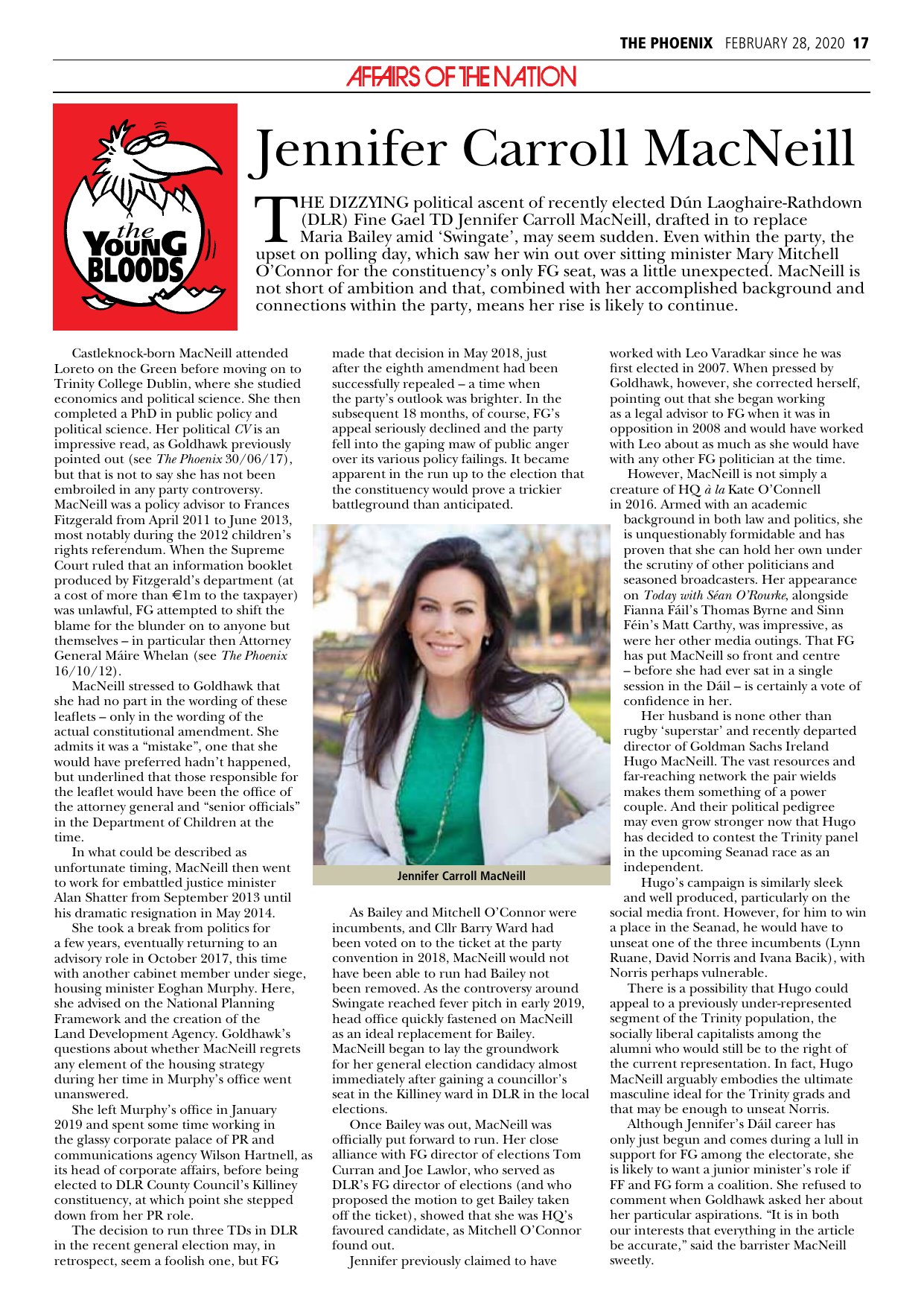
The dizzying political ascent of the Dún Laoghaire-Rathdown TD drafted in amid 'Swingate' — and why her rise is likely to continue.
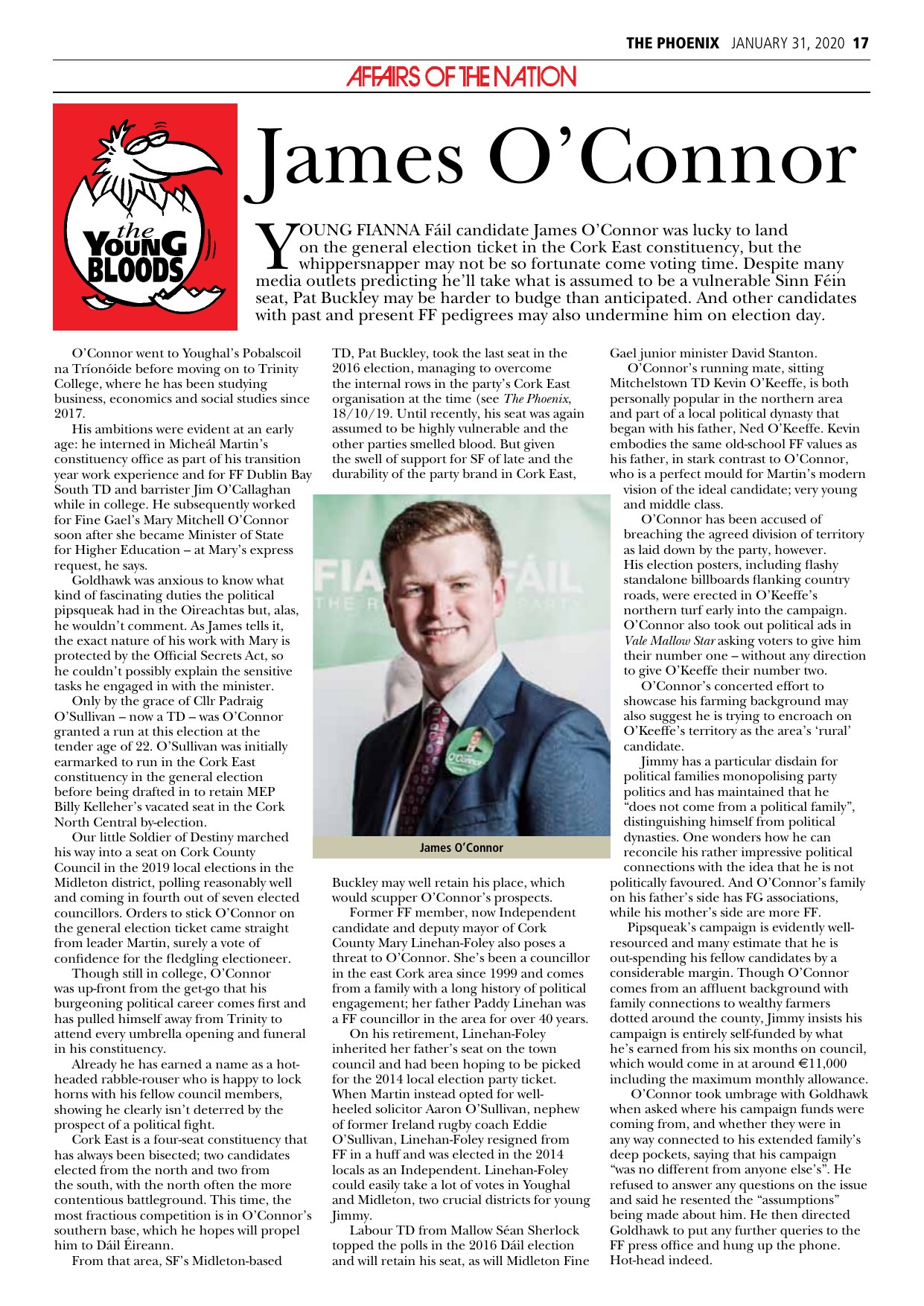
The young Fianna Fáil candidate who was lucky to land on the Cork East ticket — and the rivals who could yet undermine him.
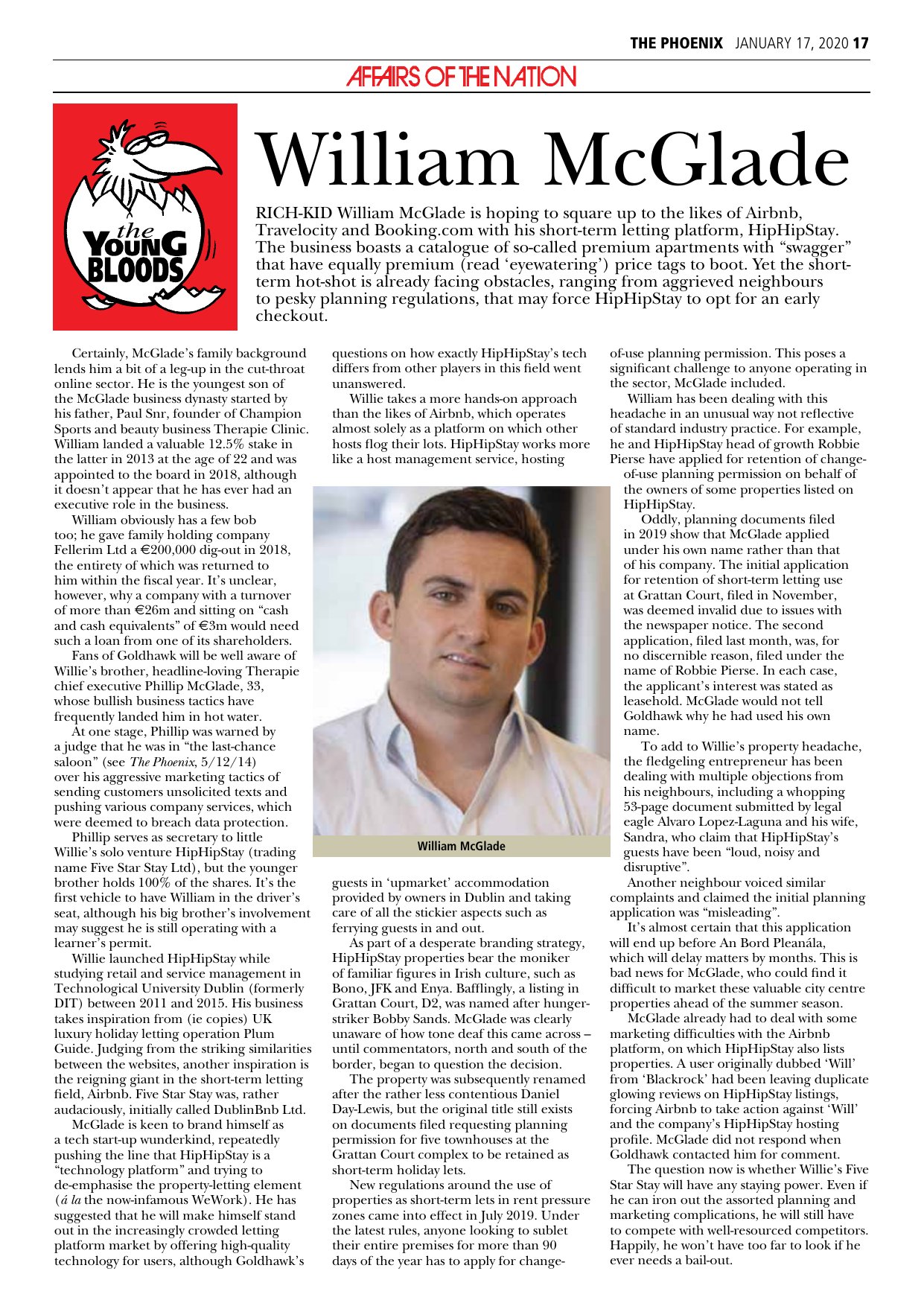
The rich-kid founder squaring up to Airbnb with 'premium' short-term lets — and the planning objections piling up around him.
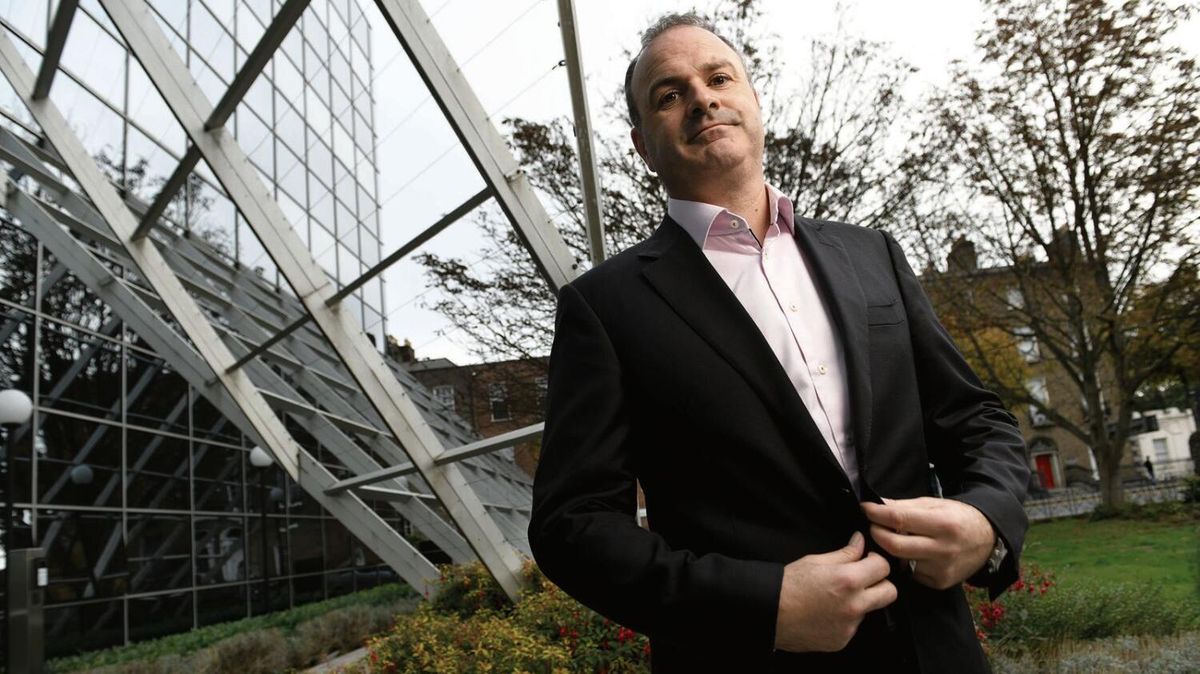
How a lockdown-founded property firm committed €150 million to projects across Britain and Ireland in under a year.

A High Court petition against one of the developer's firms over an alleged debt of close to €130,000.
Richard Grogan's short, factual employment-law videos made him a folk hero to 107,000 followers.
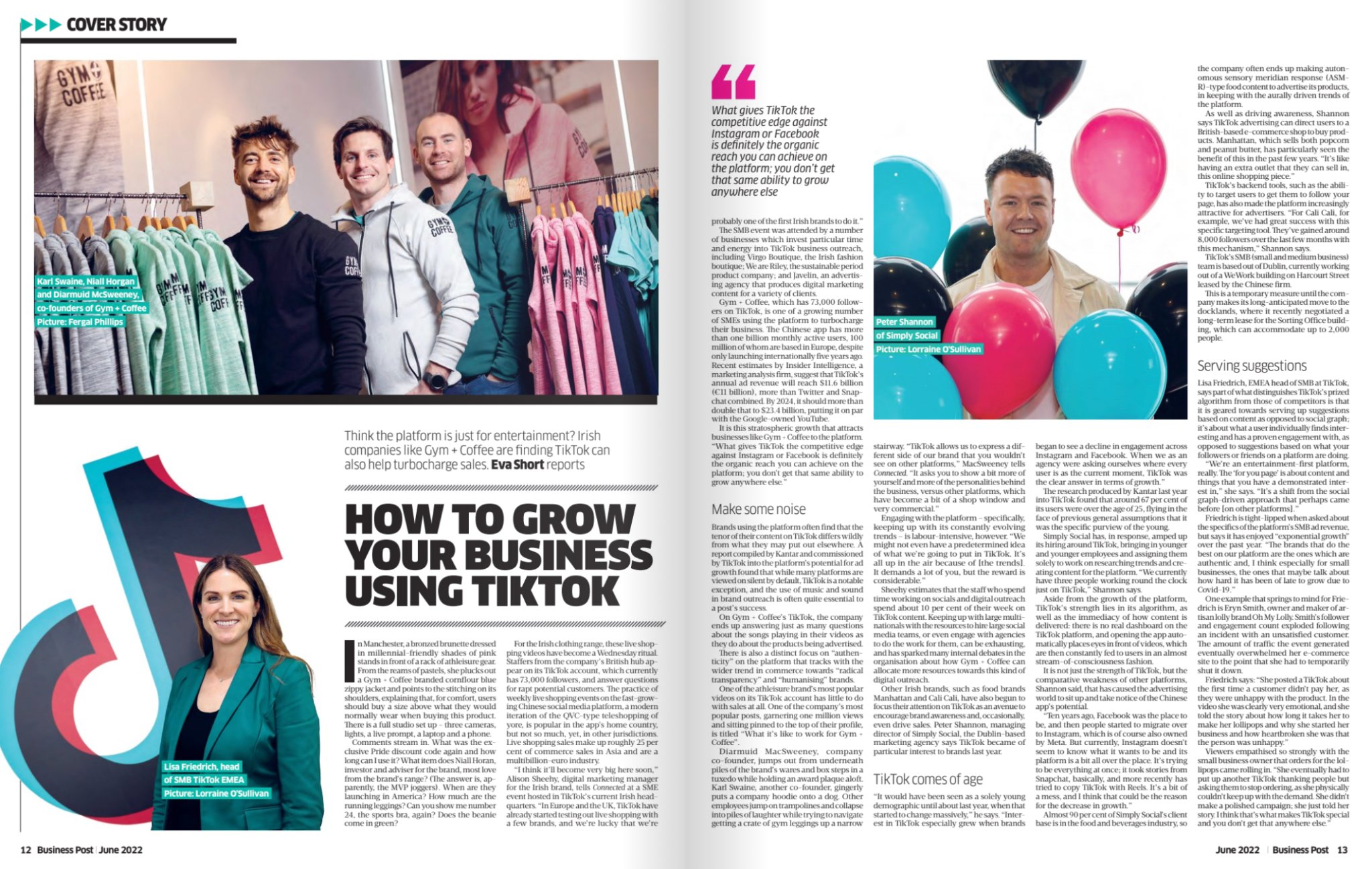
Irish companies like Gym + Coffee are finding the platform can turbocharge sales, not just entertain.
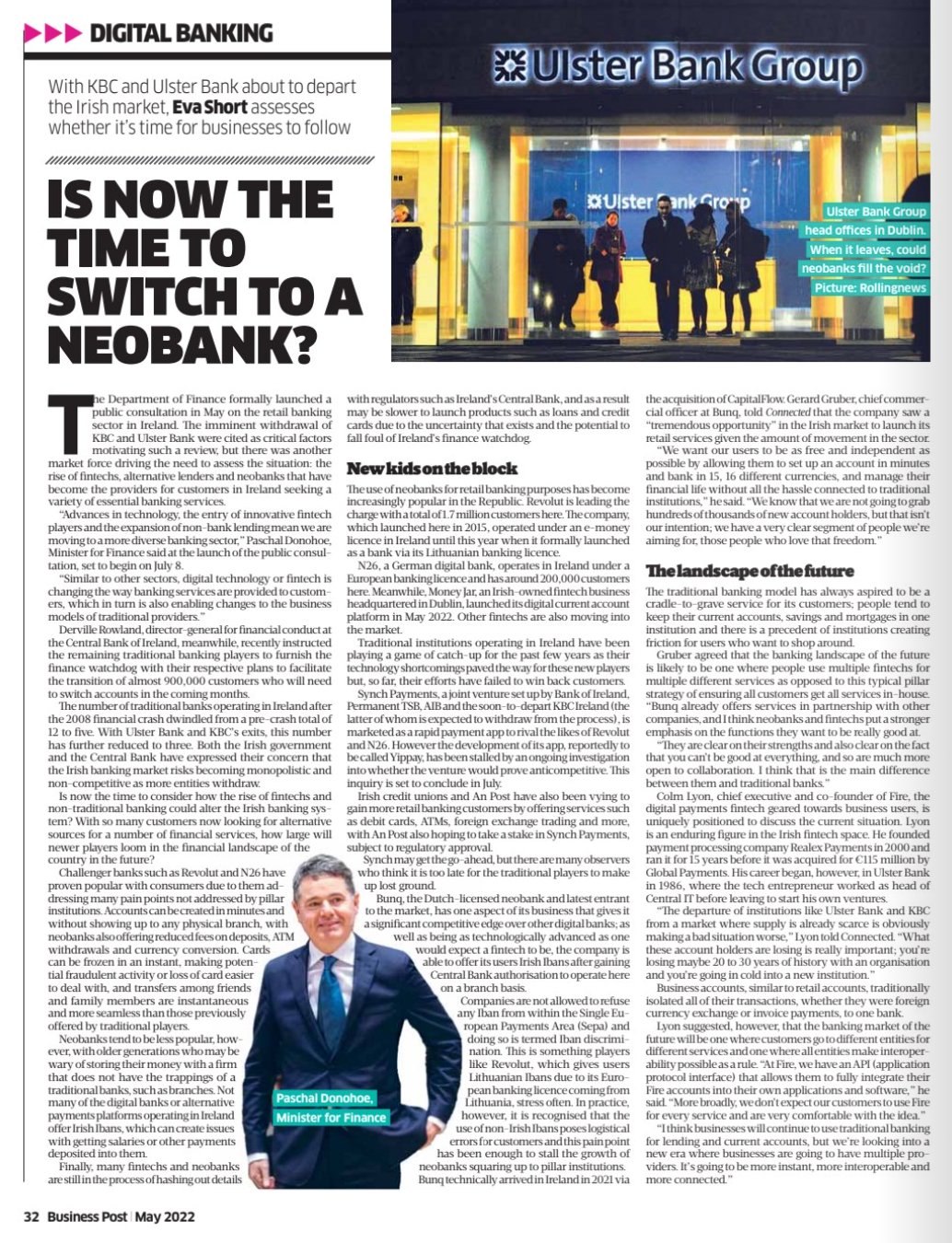
With KBC and Ulster Bank withdrawing, fintechs and neobanks are reshaping Irish retail banking.
Grief, harm reduction and mental health, including my work as Health and Harm Reduction Editor at spunout.
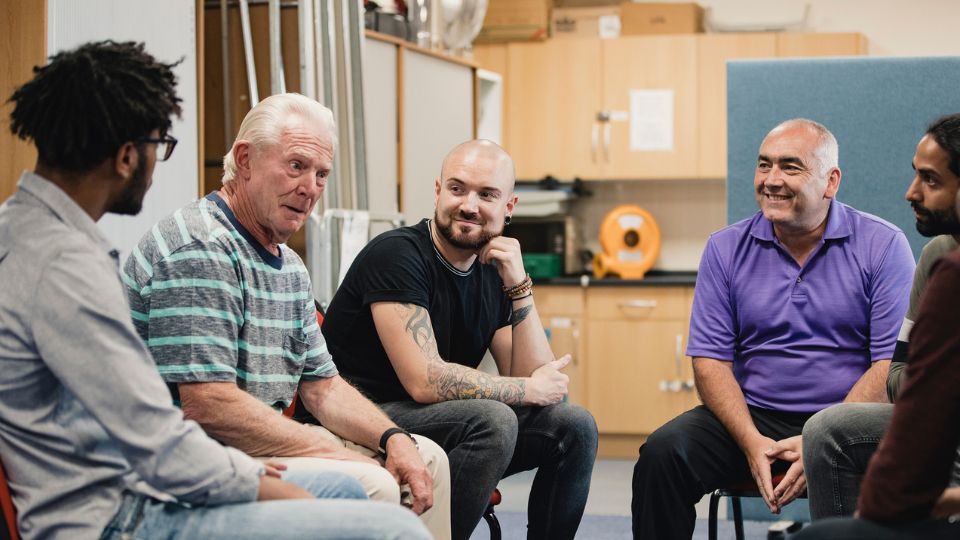
On communal mourning — from the Buddhist parable of the mustard seed to the quiet grief work of Ireland's men's sheds.

If left unchecked, the occasional use of substances to help cope with and express grief can curdle into something much darker and, in fact, become its own problem.

Grief is complex and all‑consuming; the emotions it inspires can range from anger to heartbreak to complete numbness. It can be hard to know how to manage these feelings and continue moving through life while carrying them, especially if those around you can’t relate to what you’re feeling.

Research from UC Davis suggests that taking small doses of psychedelics can allay depression and anxiety – but it also revealed some negative side effects.

‘History is filled with accounts of the impossible made possible’
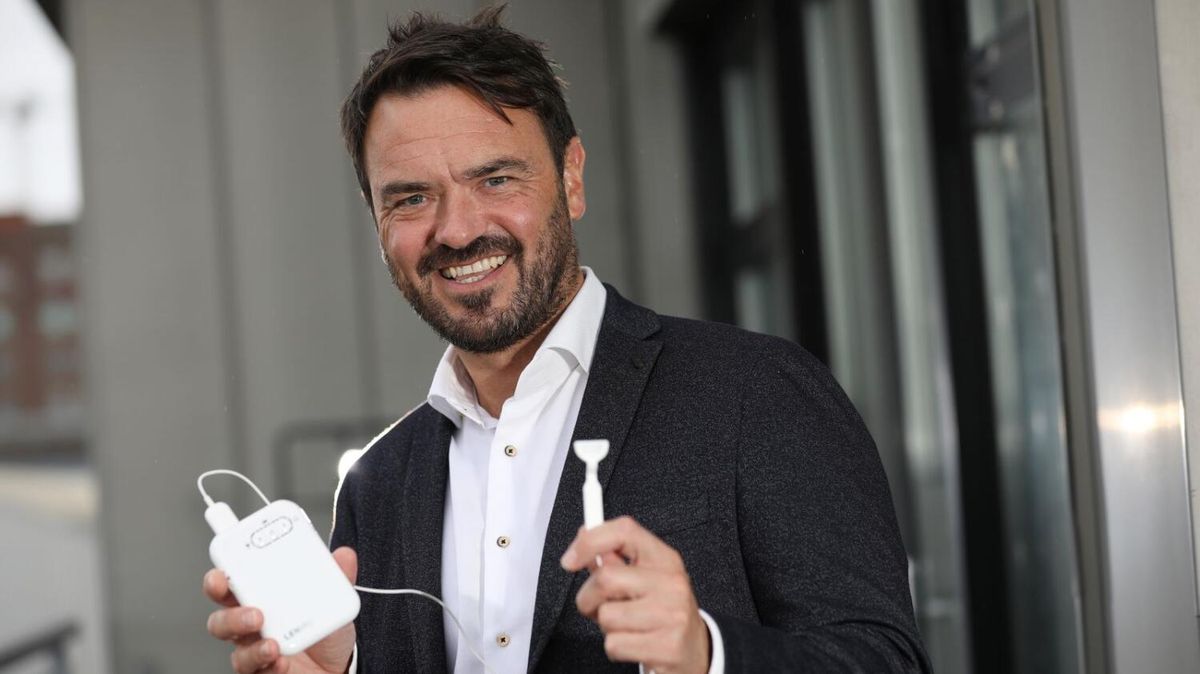
Dr Ross O'Neill of Neuromod on treating tinnitus, the Lenire device, and why the US veterans system is central to its expansion.



Film, music, art and internet culture, from student papers to i-D.

50 years after the roller skating boom of the 70s, Gen Z is buying skates in droves amid a viral TikTok craze.

"It's like the government doesn't see music venues as something they have to deal with," said Vinny Casey of The Workman's Club.

An essay on chaos, curation, and the fetishisation of the artistic mind, from the Hugh Lane's recreation of Bacon's studio.

The director on Havana's drag bars, Marcuse, and truth: "the film is about becoming, finding your voice, singing for the first time."

The Sing Street and Love/Hate actor on drama school, misplaced patriotism, and returning to Ireland from London.
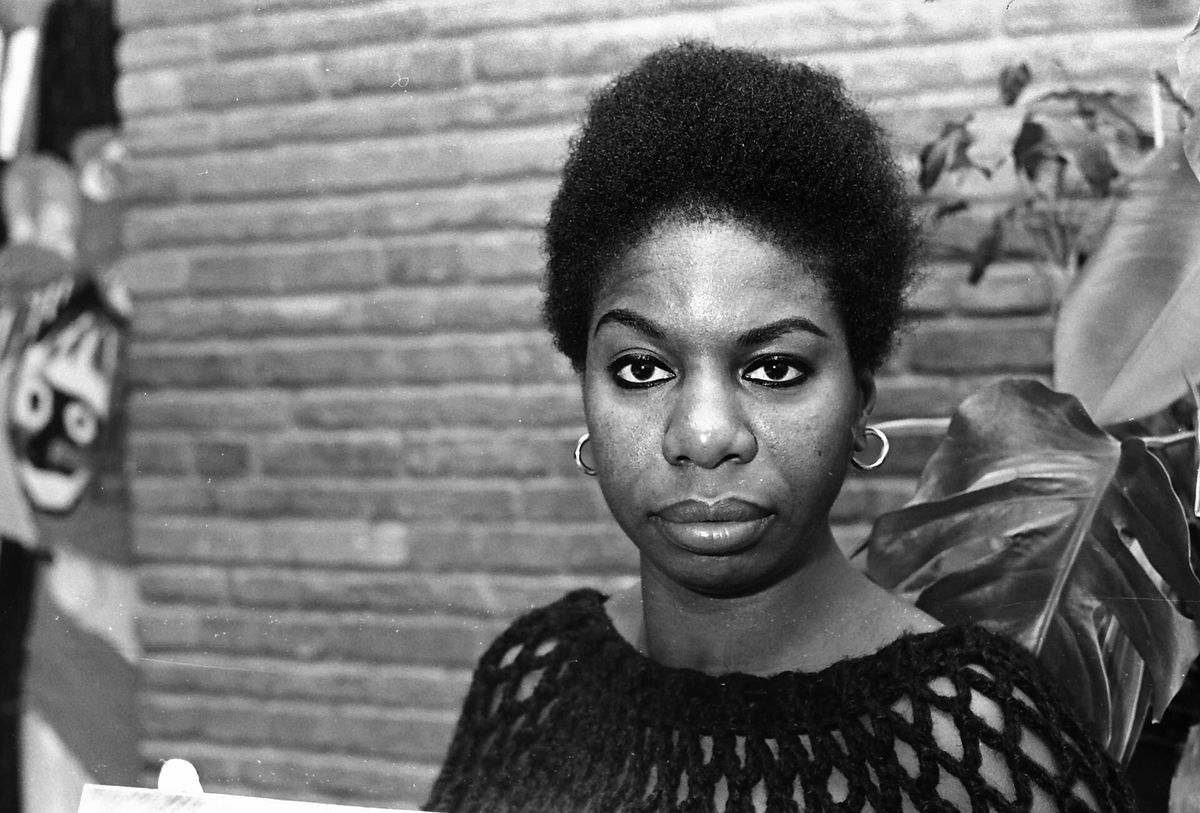
Reappraising the 1965 album that distils Simone's voice, technical daring, and deepening involvement in the civil rights movement.

On Dexter Navy's neon-drenched promo and what psychedelic hip-hop says about the drug experience.

Daniel Fox and Dara Kiely on touring, in-joke-laden noise rock, and the episode behind 'Holding Hands with Jamie'.

Signe Pierce and Alli Coates on the viral performance-art film — a mirror-masked woman, a Myrtle Beach mob, and what it reflected back.
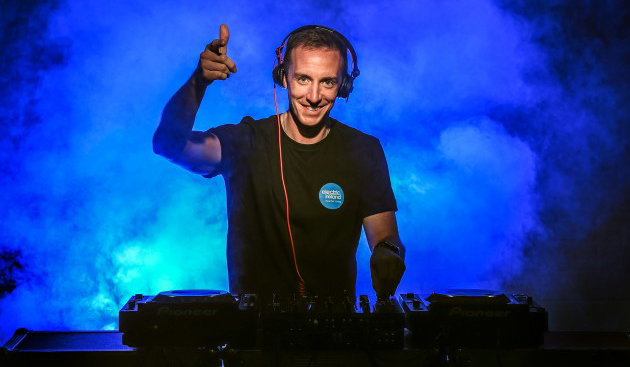
For Mark McCabe, Maniac 2000 (which is, as it stands, Ireland's fourth best-selling Irish single of all time) has become somewhat of a long-standing legacy.

Over the heads of the tech hubs, bleeping happily, were the oddly ecclesiastic gold awnings and beige pillars.

Commissions & enquiries
evadiminutive@gmail.comThe Business Post · January 2022
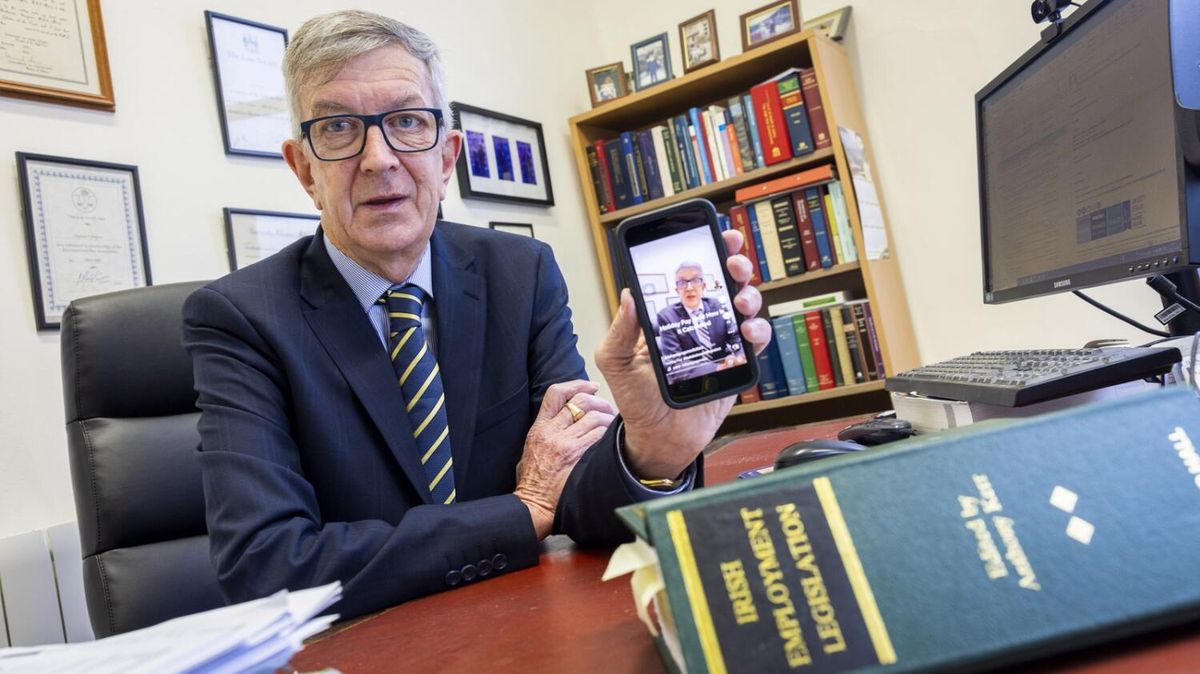
Richard Grogan sits at his desk against a backdrop of framed letters and certificates.
"I'm about to scream with some of the messages I'm getting," he says, wagging two fingers at his phone's camera in the style of a hectoring but ultimately well-meaning older relative. "There is only one annual leave year in Irish law, and that's from April 1 to March 31."
For dramatic effect, he pulls a heavy tome on Irish law – complete with Post-Its sticking out from the edges of the pages – into the shot. "It's in section 2 of the Organisation Working Time Act. I've got a big book – it's written in it."
The Dublin-based solicitor, is one of Ireland's most unlikely TikTok stars. He has amassed 107,000 followers on the platform favoured by Gen-Z'ers since opening an account last month, and become something of a folk hero to young Irish working people.
Grogan, who set up his practice a little over a decade ago, can't really account for this rapid increase in popularity. He has been an active social media user for years, primarily on LinkedIn and, more recently, Instagram.
While giving a seminar to the Law Society of Ireland on how fellow legal professionals can better wield social media last year, someone pointed out that he had yet to migrate to TikTok, eventually prompting him to open his own account.
Grogan doesn't use algorithm-friendly hashtags or the coloured, ambient lighting favoured by most of TikTok's stars, nor does he learn popular dances.
It's just him sitting in his office – or, occasionally at home, as a Christmas tree in the background betrayed over the break – making simple, quick videos explaining elements of Irish employment law, often rounded off with one catchphrase: "That's a law, and that's a fact."
It's this simplicity and lack of agenda that he believes is the likely key to his success.
"I think people just like the fact that I'm slightly different than a lot of other people," Grogan told the Business Post, reflecting on how his follower count hit six digits within his first four days on the platform. "I suppose I came on [TikTok] at a particularly good time, when there were a lot of questions coming up on employment law."
Grogan's videos are typically 30 to 60 seconds long, and tend to stick to more cut-and-dried legislation as opposed to wading into case law. He doesn't use the videos to promote his own services as a solicitor, and said the lack of an obvious promotional agenda is part of what makes the account so popular.
"The motivation behind the account is to give information, it isn't to sell Richard Grogan & Associates," he said. That said, the spate of recent interest has occasionally converted into new clients.
"The fact that people come and talk to me is an added bonus, but the account was not set up for that," Grogan said. "It was set up because this office is part of the Law Society pro bono scheme, and I thought that getting information to people is just as good as running the odd case."
In the run-up to Christmas, many workers, and occasionally employers too, had pressing questions about annual leave entitlements. Throughout the pandemic, questions came up on issues such as whether employers could compel employees who are close contacts to present to work, and if antigen tests or PCR tests were suitable medical certification for time off.
Grogan said that due to the nature of TikTok, it is more difficult to discern the profile of the average follower relative to other platforms. About 45 per cent of his followers on Instagram fall into the 25 to 35 age bracket, and another 27 per cent are aged between 35 and 45, according to his own estimates.
One of the drawbacks of social media, Grogan said, is that those lacking in actual expertise have equal opportunity to put out inaccurate information online.
"There is an awful lot of misinformation on social media these days, and a lot of people putting up information on legal issues who haven't actually got a clue," he said.
Occasionally, followers have even got in touch to say that the advice dispensed in Grogan's videos has helped them resolve an issue with an employer before it became a legal matter.
"Often on Instagram, I'll get a DM directly – yes, I've got all the lingo now – or maybe an email to say a particular video resolved a problem. That's great to hear, because that means that a dispute that was festering in a workplace is no longer there," he said.
Grogan said that the issue of open access to information is one that the Law Society itself has often promoted, and is ultimately beneficial to the profession at large. "If the information is there, it can stop claims arising, but it also means that people who need to bring a claim are are easily able to get the information," he said.
Last month, research released by Cloudflare, the cloud services firm, revealed that TikTok had overtaken Google.com to become the most popular web domain in the world. In the same study last year, it had ranked seventh behind Google, Facebook, Microsoft, Apple, Netflix and Amazon.
According to ByteDance, the Chinese firm which owns TikTok, the site has one billion active users. In a piece published last month, the New York Times revealed details of reports which the firm had shared with advertisers.
In one of those reports, TikTok said Gen Z users, defined as 18 to 24-year-olds, watched an average of more than 233 TikToks a day, and spent 14 per cent more time on the app than millennials or Gen Xers every day.